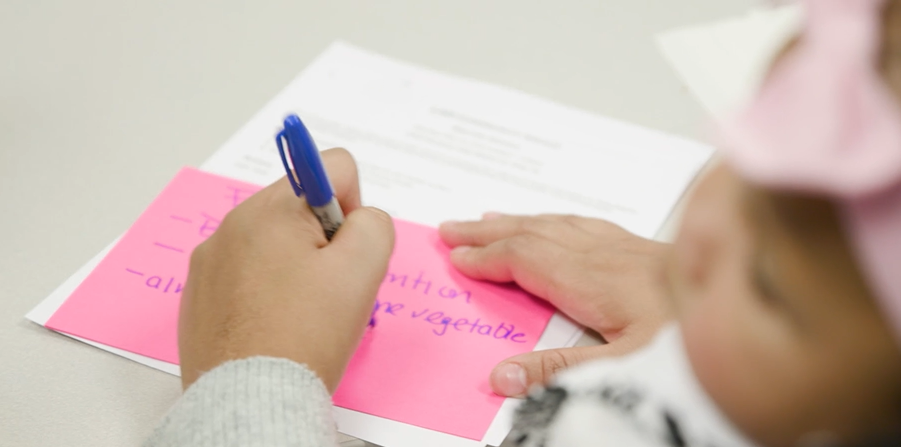
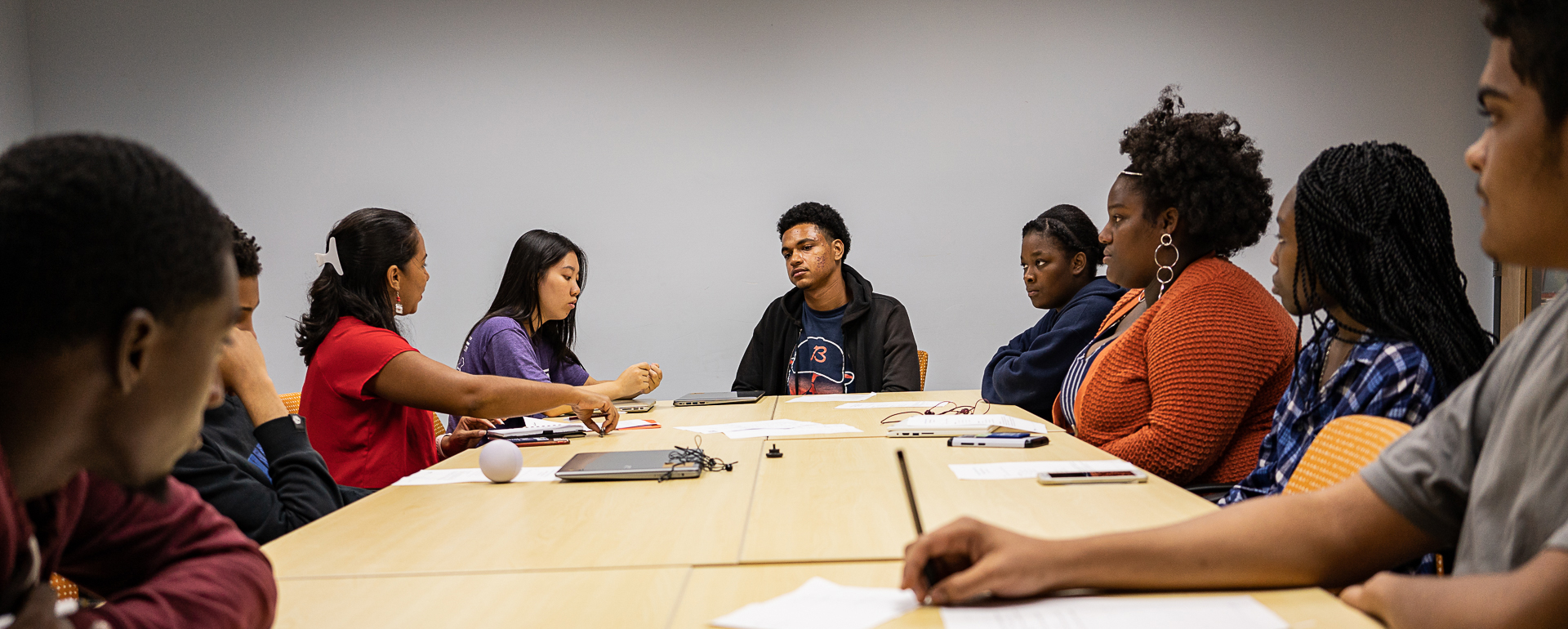
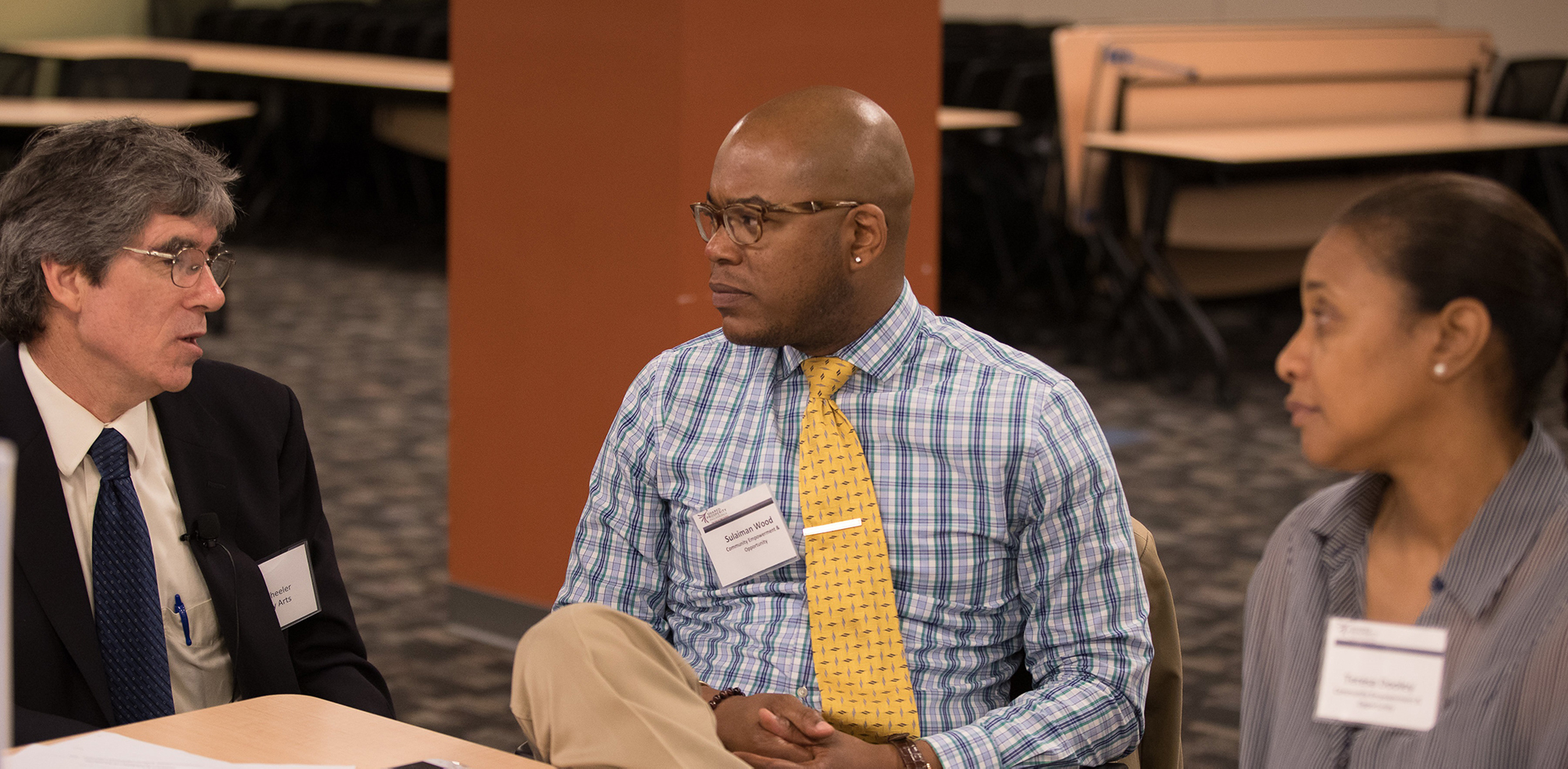


Elizabeth Guman and Deirdre Crowley help a team establish project goals.
As nonprofit organizations face ever-tightening resources and an increasingly complex world today, there has been a growing demand for nonprofits to partner with each other to address the needs and issues in our communities. Moreover, many foundations that offer necessary grant money either prefer or indeed require organizations to partner in order to receive their grants. These factors have created the conditions in which nonprofit organizations must work together in order to realize their visions and fulfill their missions in their communities.
When these partnerships work well, they can leverage the unique strengths and particular resources of each partner and develop creative solutions that have a real impact. However, when expectations and goals are unclear, roles and responsibilities are confused and divergent business cultures and practices create problems in trust, partnerships can actually be a drain on time, resources and energy. Strategy Arts’ expertise in planning and meeting facilitation can help ensure that each party becomes a truly effective partner in a mutually beneficial relationship with each other and the community.
Establishing the Partnership

Laying a Strong Foundation
A first step to an effective and collaborative partnership is to lay a strong foundation. Strategy Arts, along with the project leadership teams, helps to determine the best way to clarify project goals, roles, process agreements and evaluation strategies.
Assistance with Grant Proposals
Moreover, Strategy Arts will assist in the structuring of grant proposals to get funding for strategic planning, project management support and objective reassessment. If the funding has been set, we can help determine how your project can stay on track within existing budget and milestone constraints.
Project Kickoff
Extending Ownership of the Vision
The next step, project kickoff, involves the partnering organizations and all of the key stakeholders associated with the project. Including all key stakeholders is vital because extending ownership of the vision beyond the leadership teams will drive greater acceptance and enthusiasm for project objectives. Authority and accountability in collaborative projects among nonprofits are frequently diffused among individuals who are not well acquainted. Therefore, Strategy Arts guides participants in sharing their own thoughts on critical issues for the project and in establishing expectations for communications, accountability and responsibility. All agreements are documented and shared across the teams.
Building Trust
Building trust is critical in this step of the partnership, and Strategy Arts incorporates our Team Development tools such as the DiSC Team Culture Report and the Grove Team Performance Model to enhance, clarify and organize the process of building strong working relationships that will foster the open communication that is essential for the partnership to work.
Mid-point Meeting and On-going Planning Support
Change Management
Change management is an inevitable part of any collaboration. Whether a project is short-term or long-term, team aspects will change and project objectives may require revision. Strategy Arts uses our data-gathering expertise to work with stakeholders to evaluate comprehensively the progress of the project, as well as all strengths and weaknesses. The results of our project analysis drive a mid-point strategy session. At this meeting stakeholders evaluate the progress towards the initial goals as stated in the planning and kick-off meetings. Our consultants provide every stakeholder a safe space to examine, objectively and honestly, the project to date. The focus of this crucial meeting is on examining actions and creating processes for managing change, while continuing to foster a positive working partnership.
Depending on the length and nature of a given project, additional mid-point meetings may be beneficial. During the initial steps, our consultants will help you determine what support scheme is best for your collaborative project.
Post-Evaluation
Examining the Journey
At the completion of any project, reliable post-evaluation is important. Strategy Arts helps project teams develop an evaluation strategy that meets the special needs of each project. Throughout the entire post-evaluation process, our consultants collect data and opinions from all the key stakeholders and compile a report that outlines the critical success factors of the project and recommendations concerning changes for future projects.
The entire post-evaluation process is not only of great use to future collaborative projects for this specific team of organizations, but also of great value to each individual organization. Thorough analysis of both what worked, and what impeded, the meeting of target goals provides the necessary insights for individual capacity building within each organization. Thus, each partner takes away from the partnership the outlook that they are now better prepared for collaborations with other nonprofit organizations; but just as important, they themselves are in a stronger position to serve their own constituencies.